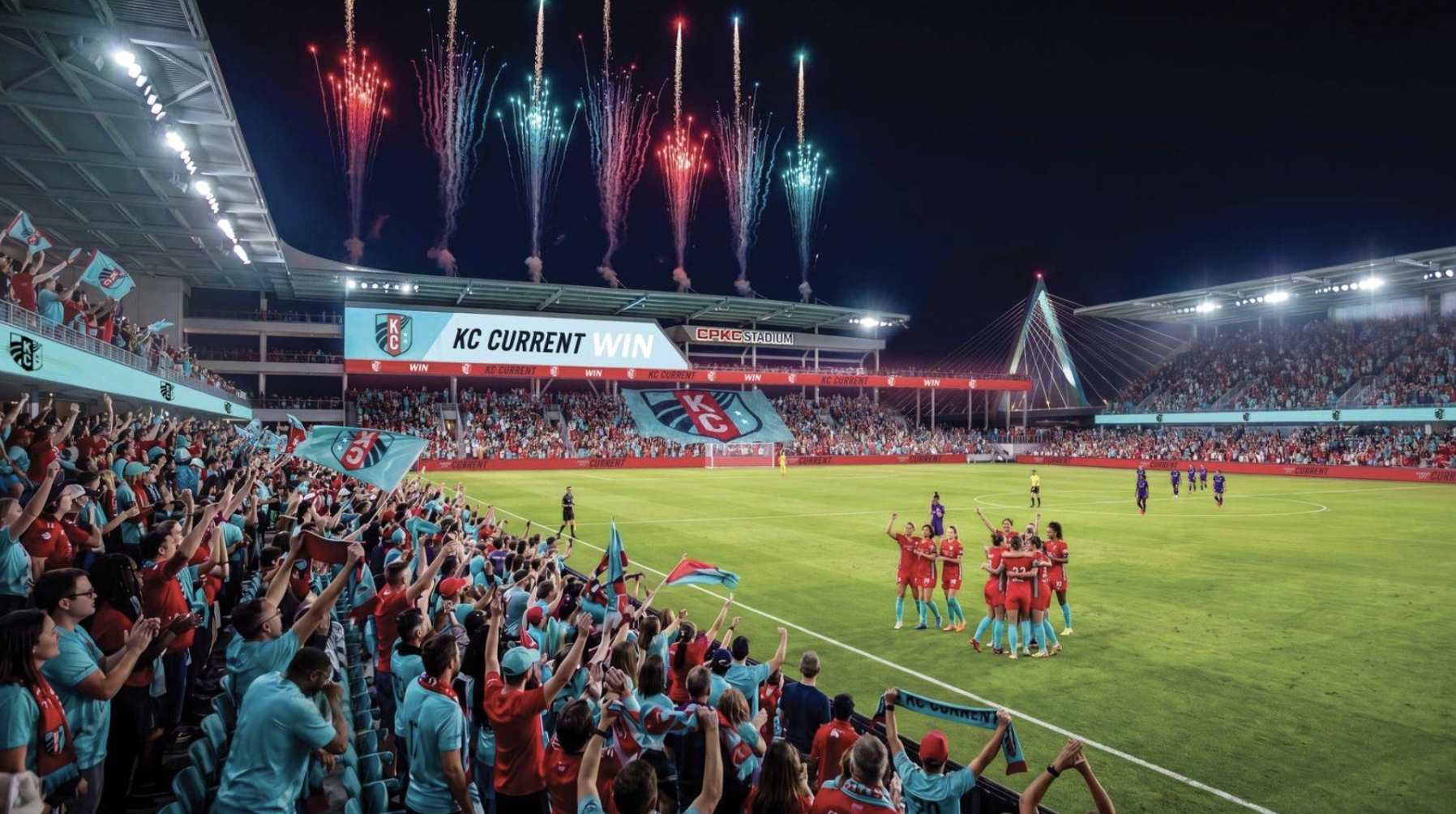
The short version. On Thursday, September 10, 2026, the Kansas City Council approved a development agreement putting up to $185 million of city financing into a $1.4 billion buildout of the Berkley Riverfront. The centerpiece is an expansion of CPKC Stadium from 11,500 seats to more than 18,000. The money is repaid from sales tax generated inside the stadium district, and the ordinance requires the developer to guarantee cashflow shortfalls. Two councilmembers voted against it.
What the council actually approved
Thursday's vote was the real one. The July action was not, and a lot of coverage blurs the two.
On July 2, the council passed Ordinance 260565, a declaration of intent sponsored by Mayor Quinton Lucas. It did not hand over money. It directed the city manager to negotiate a development agreement with Ballard Development LLC and its affiliates, apply for tax increment financing, seek state funding through the Missouri Development Finance Board, and evaluate issuing up to $235 million in special obligation bonds. It also directed an analysis of traffic and infrastructure impacts on Columbus Park. That vote was 10 to 2, with Nathan Willett and Johnathan Duncan opposed.
Thursday's vote approved Ordinance 260748, the agreement that came out of those negotiations, at a lower number. Its text authorizes the city manager to enter "one or more financing agreements for total funding not to exceed $185,000,000.00, subject to the terms outlined in the Development Agreement, including cashflow shortfall coverage guarantees from the Developer." It also appropriates $150,000 for a third-party financial feasibility study and carries an accelerated effective date.
Nobody has explained what changed between $235 million and $185 million, or what left the package to close the $50 million gap. That remains an open question.
Where the $185 million goes
The city money is not all going into the stadium bowl. Per KSHB's reporting on the vote, it supports:
- Stadium renovations taking capacity past 18,000 seats, roughly 6,500 more than today
- A mixed-use district and transient parking structures, with 1,500 parking spaces added
- Trail extensions
- Stormwater and drainage system updates
- Riverfront and core infrastructure
No source has published an itemized breakdown of the $185 million, so treat that as a list of what the money supports rather than a line-item allocation. Private investment carries the rest of the $1.4 billion, putting the city's share at roughly 13 percent. That number is not final. The ordinance also authorizes pursuing State Supplemental Tax Increment Financing and a development plan under the Missouri Downtown and Rural Economic Stimulus Act, so additional public support is still in play.
How the city gets paid back
This is the part that separates the deal from most stadium subsidies.
The debt is retired using sales tax revenue generated by the stadium and the surrounding district. Reporting from Hoodline and Inside World Football puts the term at about 30 years, and Duncan's own objection referenced a 30-year horizon, though the term does not appear in the ordinance text.
The backstop is the key term. Ordinance 260748 requires "cashflow shortfall coverage guarantees from the Developer." KSHB reported that debt shortfalls are the responsibility of the Current's ownership group, and Inside World Football reported the team must carry a line of credit equal to 110 percent of one year's debt service. Lucas told KCTV5 on September 8 that "this is actually debt being taken on by the Kansas City Current itself," though KCUR described the July structure as the city issuing bonds. Who formally issues the debt is genuinely muddled across sources, and the city has not clarified it.
What is clear from the ordinance is that shortfall risk sits with the developer first.
The two no votes
Councilmembers Johnathan Duncan and Eric Bunch voted against the agreement, per KCTV5, and their objections were different from each other.
Duncan's was fiscal. "These bonds, even if it's being backed by another entity, this isn't free money," he said. "We are redirecting revenue that would be going to our general fund back into projects." He pointed to a 2.5 percent budget decrease this fiscal year and warned residents may not see a full return for up to 30 years.
Bunch's was operational. He raised questions about the capacity of streetcar operations, saying service is already close to maxed out against what he characterized as a 60 percent jump in stadium capacity. The actual increase from 11,500 to 18,000 is about 56 percent, so treat that figure as his shorthand. The context matters: the streetcar's 0.7-mile Riverfront extension opened May 18, 2026, at a cost of $62 million, running from River Market across the Grand Boulevard Bridge to the Berkley Riverfront. A separate $15 million bike and pedestrian bridge opened May 8. Both were built for the riverfront at its current scale.
Neither objection was about whether the Current should get a bigger stadium. Both were about what the city takes on to get there.
How this compares to the Royals deal
Three weeks earlier, on August 20, 2026, the same council voted 11 to 2 to approve Ordinance 260704, funding a Royals ballpark at Crown Center. Duncan was a no vote there too, alongside Nathan Willett.
The headline number gets misreported constantly, so here it is straight. The city commits $600 million. Missouri adds roughly $537 million through Show-Me Sports Bonds and MoDOT cost-share. Total public support is about $1.14 billion against a $1.9 billion Phase I cost, or 60 percent. The Royals contribute $760 million.
The structures are not alike.
In the Royals agreement, the team has "no obligation to repay or otherwise support payment of" the bonds. If revenue falls short, KCUR reported those dollars come from the city's general fund at the expense of police, fire, transit, and neighborhood services. The city is backing about $510 million in bonds plus $90 million in direct infrastructure funding, and the TIF plan caps TIF-derived repayment at $382 million, leaving roughly $128 million expected from other revenue. The Beacon calculated that using special obligation bonds rather than voter-approved general obligation bonds costs about 1.475 percentage points in interest, roughly $7 million a year. That calculation is the Beacon's own and has not been independently replicated.
In the Current agreement, the shortfall guarantee runs to the developer. The city share is smaller in dollars and in proportion.
That is a factual difference in risk allocation, not a verdict on either project. And Duncan's objection cuts across both, which is worth sitting with. He voted no on the Current deal too, on the grounds that a guarantee from another entity does not make redirected revenue free.
The World Cup clock
FIFA announces 2031 Women's World Cup hosts on November 23, 2026, in Zürich. No decision has been made yet. Only one bid is on the table, from the United States, Mexico, Costa Rica, and Jamaica, which makes approval likely but not official.
An 18,000-seat CPKC Stadium puts Kansas City inside the range FIFA has used. Hindmarsh Stadium in Adelaide hosted six matches at the 2023 tournament, including a Round of 16, with a capacity of 16,500.
Kansas City also just hosted six matches in the 2026 men's World Cup at Arrowhead, including an Argentina versus Switzerland quarterfinal. That is the argument Lucas is making about delivery capacity. In July he told KSHB: "This shows we know how to deliver really major events, and this community has a true commitment to women's sports."
If the bid fails, the expansion still proceeds. Nothing in the agreement is conditioned on FIFA.
What Current Landing is
The stadium is one piece of a larger district.
CPKC Stadium opened March 16, 2024, as the first privately financed stadium purpose built exclusively for a professional women's soccer team. It was originally announced at $70 million and budgeted at roughly $117 million by 2022; the club now describes the investment as $140 million. The Current built and financed it on a 7.08-acre site leased from Port KC under a 50-year ground lease. In its first season the Current became the first NWSL club to sell out every home match, and it has sold out every regular season home match since.
Current Landing is the mixed-use district going up around it. Construction began in December 2024, with a ceremonial groundbreaking March 26, 2025, and retail, hotel, and restaurant openings starting in spring 2026. KCUR reported phase one was mostly privately funded but received a $5.5 million Missouri Development Finance Board tax credit for infrastructure. Founder's Park, a riverfront green space, began construction February 4, 2026. Phase two is what Thursday's vote funds.
The district is built by Palmer Square Real Estate Management, which Angie and Chris Long own, and co-developed by Marquee Development. The Longs co-own the Current along with Patrick and Brittany Mahomes.
Lucas framed the site in a statement after the vote: "For too many years, our riverfront was a landfill in the heart of our city. Today, our riverfront is a leading destination in our region and the Midwest that's poised to grow even more."
What's still unresolved
- No groundbreaking date. As of the vote, the Current had not announced one. The only timeline on record is Fox4's July 2 reporting that construction would start in fall 2027 and finish before the 2031 tournament, which predates the revised agreement.
- No published vote tally. Legistar shows the September 10 meeting with minutes and video not yet available, and no outlet has published a roll call.
- The $50 million reduction is unexplained. Neither the city nor any outlet has said what left the package.
- State incentives are still ahead. The ordinance authorizes pursuing Supplemental TIF and a MODESA development plan. Approving either should return to council.
- Streetcar capacity is an open operational question. Bunch raised it. Nothing in the agreement answers it.
Reporting from KCTV5, KSHB, KCUR, Startland News, The Beacon, Bond Buyer, Ballpark Digest, and Kansas City Ordinances 260565 and 260748.