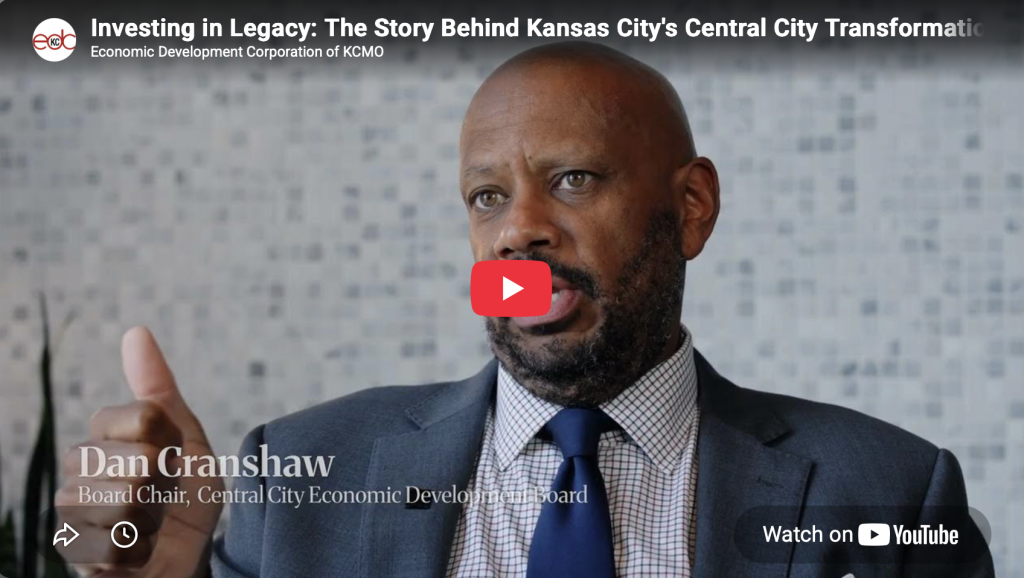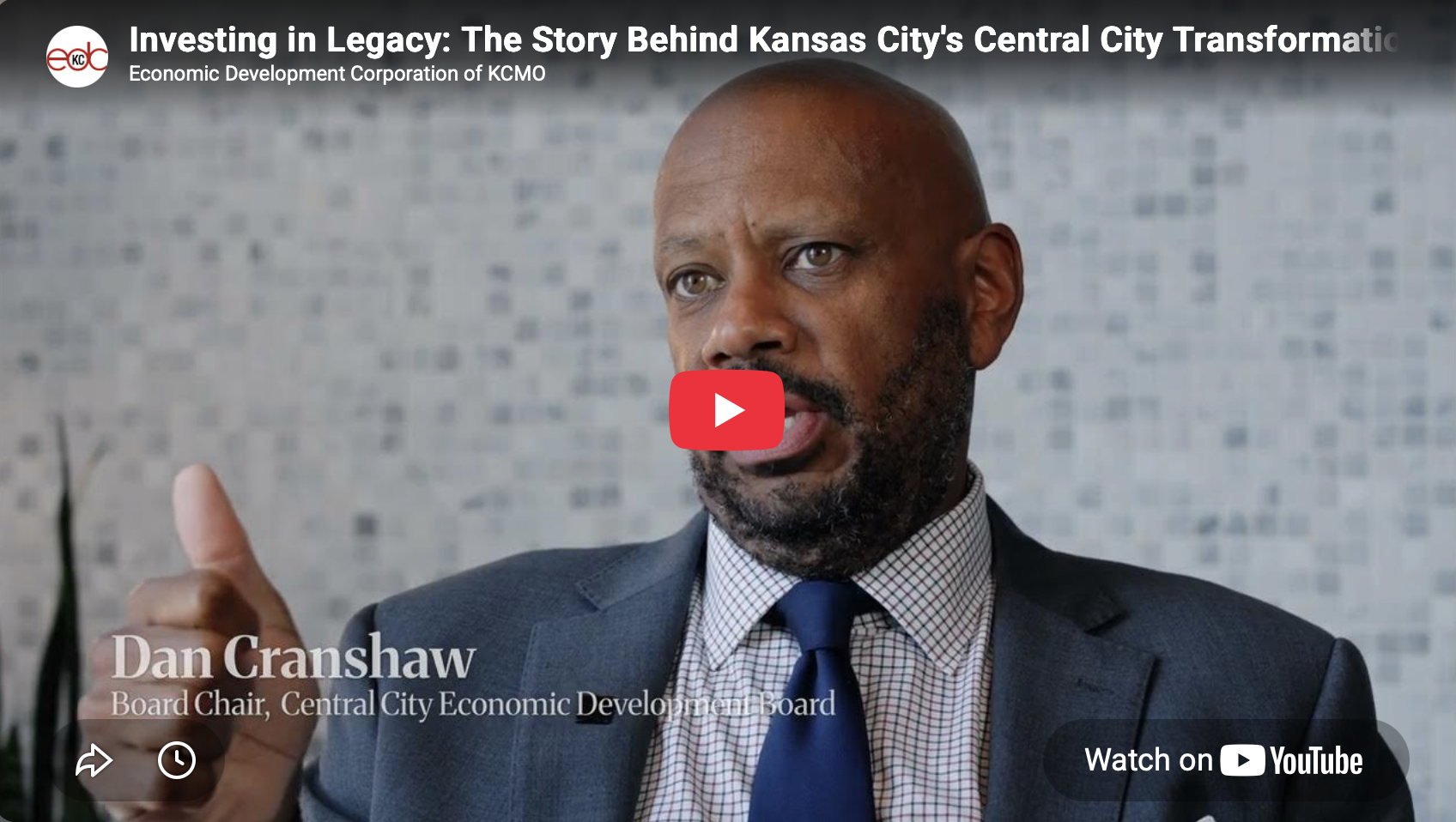
Nearly ten years ago, Kansas City voters said yes to a small tax with a big goal. On July 22, 2026, the people behind that decision gathered to look back at what it built, and to put the story on film.
The Economic Development Corporation of Kansas City (EDCKC) and the Central City Economic Development (CCED) Sales Tax District premiered a new documentary, Investing in Legacy: The Story Behind Kansas City's Central City Transformation, at a community reception at The Offices at Overlook, 2801 Dr. Martin Luther King Jr. Blvd. The venue was not a coincidence. Overlook is itself a CCED-supported development, an example of the kind of project the film is about.
What the CCED sales tax actually is
The Central City Economic Development Sales Tax Program was created after Kansas City voters approved it in 2017. It is a one-eighth-cent sales tax collected within a defined section of the city's east side, roughly bounded by Ninth Street to the north, Gregory Boulevard to the south, Paseo Boulevard to the west, and Indiana Avenue to the east. Money raised inside that district stays in that district.
The program exists to fix a specific problem. For decades, buildings on the east side cost the same to construct as buildings elsewhere in Kansas City but appraised for far less, a gap shaped by highway construction, industrial decline, and long-term disinvestment. That valuation gap made banks reluctant to lend, which meant good projects stalled before they started. CCED closes the gap. It provides what the program calls strategic gap financing, the missing slice of funding that makes a housing, retail, or community project financially possible.
The Economic Development Corporation of Kansas City administers the program, and in a recent restructuring it created a dedicated CCED team intended to improve how projects move from approval to completion.
The numbers behind nearly a decade
According to EDCKC, the program has run through seven funding rounds and invested more than $88 million in community-focused projects. That public money has helped leverage close to $1 billion in total development across the Central City, meaning each CCED dollar has pulled in additional private and public investment alongside it. The tax generates over $10 million a year, and by September 2026 the district is expected to have accumulated roughly $100 million.
The projects are concrete, not abstract. They include KD Academy, a 24-hour early learning facility; One Nine Vine, a mixed-use development with housing and retail; the Prospect Summit Duplexes, 24 affordable townhomes built with a $2.64 million total investment that included more than $900,000 from CCED; The Parker in the 18th and Vine Jazz District; and family and childhood development centers along Prospect Avenue. The Offices at Overlook, where the premiere was held, sits on that same list.
What the film is trying to do
Investing in Legacy is not a highlight reel of buildings. EDCKC describes it as the story behind the investment, told through the residents, entrepreneurs, developers, historians, and community leaders whose vision shaped the projects. The documentary features interviews with founding board members, community developers, business owners, engineers, historians, elected officials, and neighborhood advocates.
"For nearly ten years, the Central City Economic Development Sales Tax Program has helped transform community vision into meaningful investment," said Tracey Lewis, President and CEO of the Economic Development Corporation of Kansas City. "This documentary reminds us that behind every project is a person, a neighborhood, and a community committed to creating opportunities. Investing in Legacy is ultimately a story about partnership, perseverance, and the power of communities investing in themselves."
Dan Cranshaw, Chairman of the CCED Sales Tax Board, framed it as a record of intent as much as outcome. "CCED has always been about more than financing projects," he said. "It represents a community's commitment to investing in itself. This documentary captures not only what has been built, but why those investments matter and how they continue creating opportunities for future generations."
The premiere brought together elected officials, community leaders, developers, residents, and project partners. Featured speakers included Cranshaw and Lewis alongside Emmet Pierson Jr., President and CEO of Community Builders of Kansas City; Councilwoman Melissa Patterson Hazley, who represents the Third District At-Large on the Kansas City Council; and Jeremy Davis, Director of Central City Economic Development at EDCKC.
The timing matters
The documentary arrives at a decision point. The CCED sales tax is on the August 4, 2026 ballot, where Kansas City voters will decide whether to renew it for another ten years. The tax was first authorized in 2017, and without renewal it would expire in September 2027. A yes vote extends it a decade; a no vote lets it lapse unless voters revisit it later. It shares that ballot with four other measures, including large water and sewer infrastructure bonds, an affordable housing trust fund bond, and repairs to Bartle Hall, Municipal Auditorium, and City Hall.
That context is worth naming plainly. The film is produced by the same organization that administers the program, and it premiered less than two weeks before voters weigh its future. Supporters point to the $88 million invested and the roughly $1 billion in development it has helped leverage as evidence the model works. Skeptics and even some allies of the program have pushed for greater transparency and more structured project delivery, which is part of why EDCKC built a dedicated CCED staff ahead of the vote. Voters heading to the polls on August 4 will make their own call on whether the record justifies a second decade.
For now, the story is on film, and anyone can watch it. The documentary is available on EDCKC's platforms.