Kansas City's World Cup ridership numbers are in, and the headline is not just that the KC Streetcar broke another record. It is the scale of it. Between June 11 and July 11, 2026, the streetcar completed 838,826 passenger trips, a four-week total that the KC Streetcar Authority says is more than many U.S. streetcar systems carry in an entire year.
In other words, during a single month of soccer, Kansas City rode its streetcar more than some cities do in twelve.
A month unlike any in the system's history
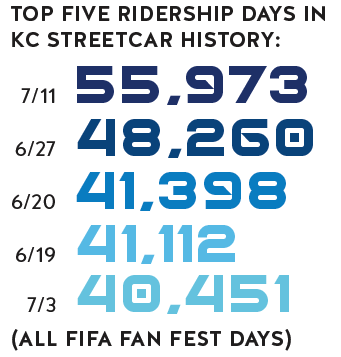
The tournament stretch was the busiest in KC Streetcar history. The system set a new all-time single-day record of 55,973 passengers on July 11, and it logged its five highest ridership days ever, all of them falling on FIFA Fan Festival days.
Average daily ridership across the window reached 27,059, climbing to 33,689 on Fan Festival days. Those figures count streetcar passenger trips only and do not include the RideKC "Streetcar Link" bus trips that ran alongside the streetcar during the same period, so the true number of transit trips was even higher.
For context on how far the system has come, the streetcar carried 162,057 riders in the entire month of June 2025, back when only the original downtown route was running. This June alone, before the four-week window even closed, it had already cleared 698,705 trips.
How KC actually pulled it off
Records are one thing. Moving that many people smoothly is another, and that is where the recap gets interesting.
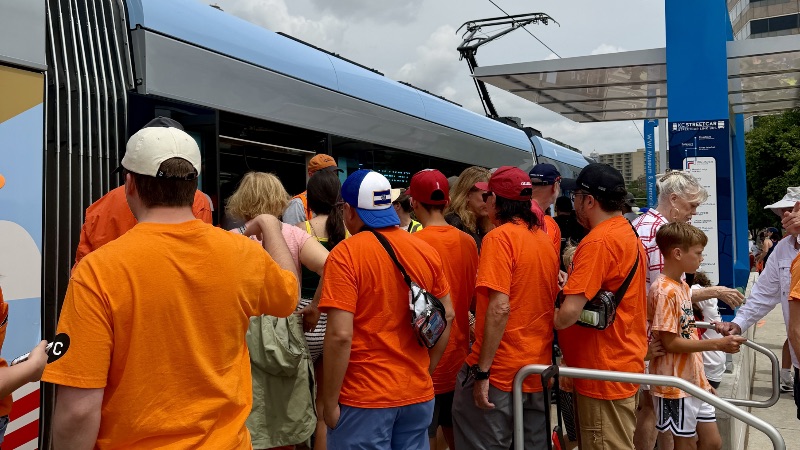
To handle demand on Fan Festival days, the KC Streetcar significantly expanded service, running 9 to 12 streetcars during peak festival hours. It did not do it alone. The Kansas City Area Transportation Authority deployed 8 to 10 supplemental RideKC "Streetcar Link" buses to add capacity along the corridor, and when matches ran late, service hours were extended to get fans home after games at Kansas City Stadium.
Even at record volume, the system held average wait times of five minutes or less. Over the entire month-long tournament, there were no major safety incidents on board streetcars or at streetcar stops.
The people behind the numbers
The smooth operation was not an accident. In preparation for the World Cup, the KC Streetcar Authority expanded its safety and security team to 28 members and stationed dedicated Streetcar Ambassadors at the busiest stops along the route.
Those ambassadors managed passenger flow, answered questions, and helped visitors and residents find their way. Collectively, they contributed more than 1,680 hours of on-the-ground support during the tournament.
"These remarkable numbers reflect not only the excitement surrounding the FIFA World Cup but also the dedication and commitment of our entire KC Streetcar team," said Tom Gerend, Executive Director of the KC Streetcar Authority. "Every streetcar team member and contractor played a critical role in providing a safe, reliable, and welcoming service during one of the most significant events in our city's history."
Not just a World Cup bump
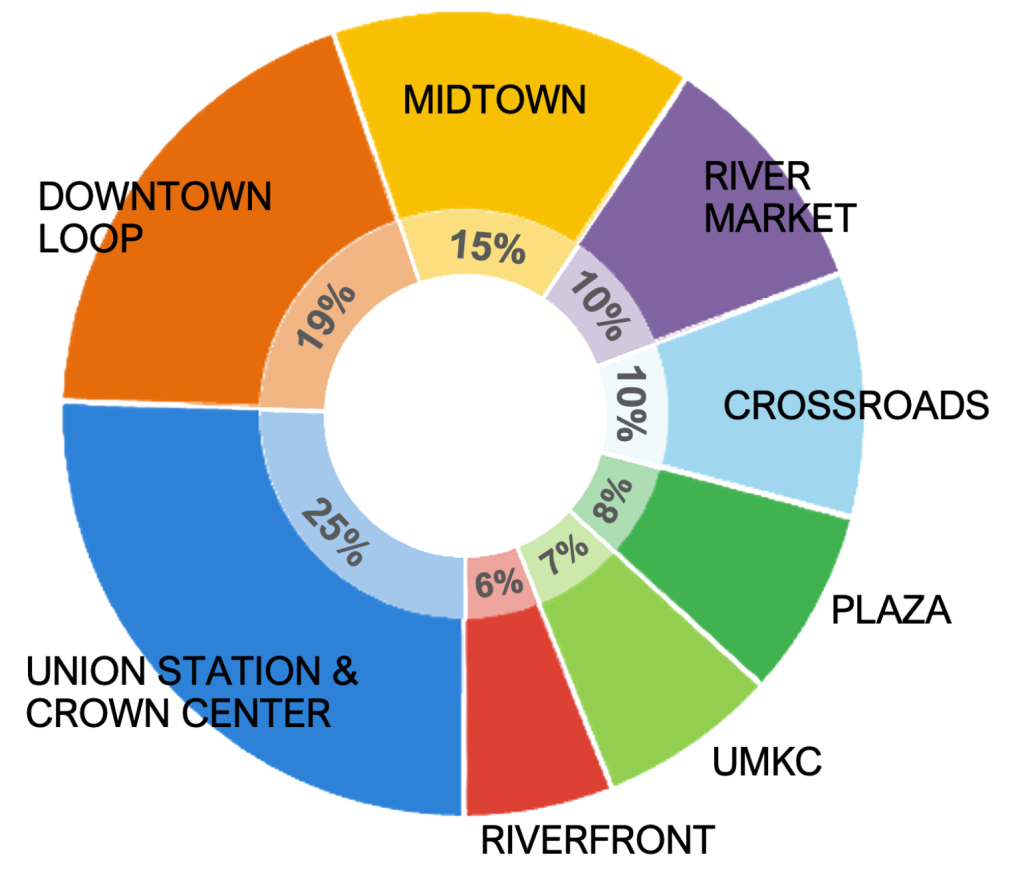
One number cuts against the idea that this was purely a tournament spike. Travel data shows that roughly 75% of all June trips went to and from destinations other than the FIFA Fan Festival, from the City Market and the Power and Light District to Country Club Plaza and the Riverfront.
That points to something bigger than a one-month event. The expanded line is carrying everyday riders across the whole route, which is why city leaders are describing the streetcar as the spine of Kansas City's regional transit system.
"During the World Cup, Kansas City moved like the city we've always known ourselves to be," said Mayor Quinton Lucas. "More than 838,000 streetcar trips and a new single-day record. That's what happens when you invest in transit. Our streetcar rose to the moment, moving more people than ever before and connecting our neighborhoods, our riverfront, and the biggest event our city has ever hosted. The tournament may be over, but the momentum is here to stay."
The bottom line
The World Cup is over, the Fan Festival has been torn down, and the visitors have gone home. What is left is a transit system that proved it could move a global crowd on a five-minute wait, a workforce that logged thousands of extra hours to make it happen, and a ridership base that was using the line long before the tournament and is expected to keep using it now.
For a city that has spent years building out its streetcar, the clearest takeaway from the World Cup may not be a single record at all. It is that the whole thing worked.
Source: KC Streetcar Authority World Cup ridership recap, media alert dated July 21, 2026. Full ridership figures at kcstreetcar.org.