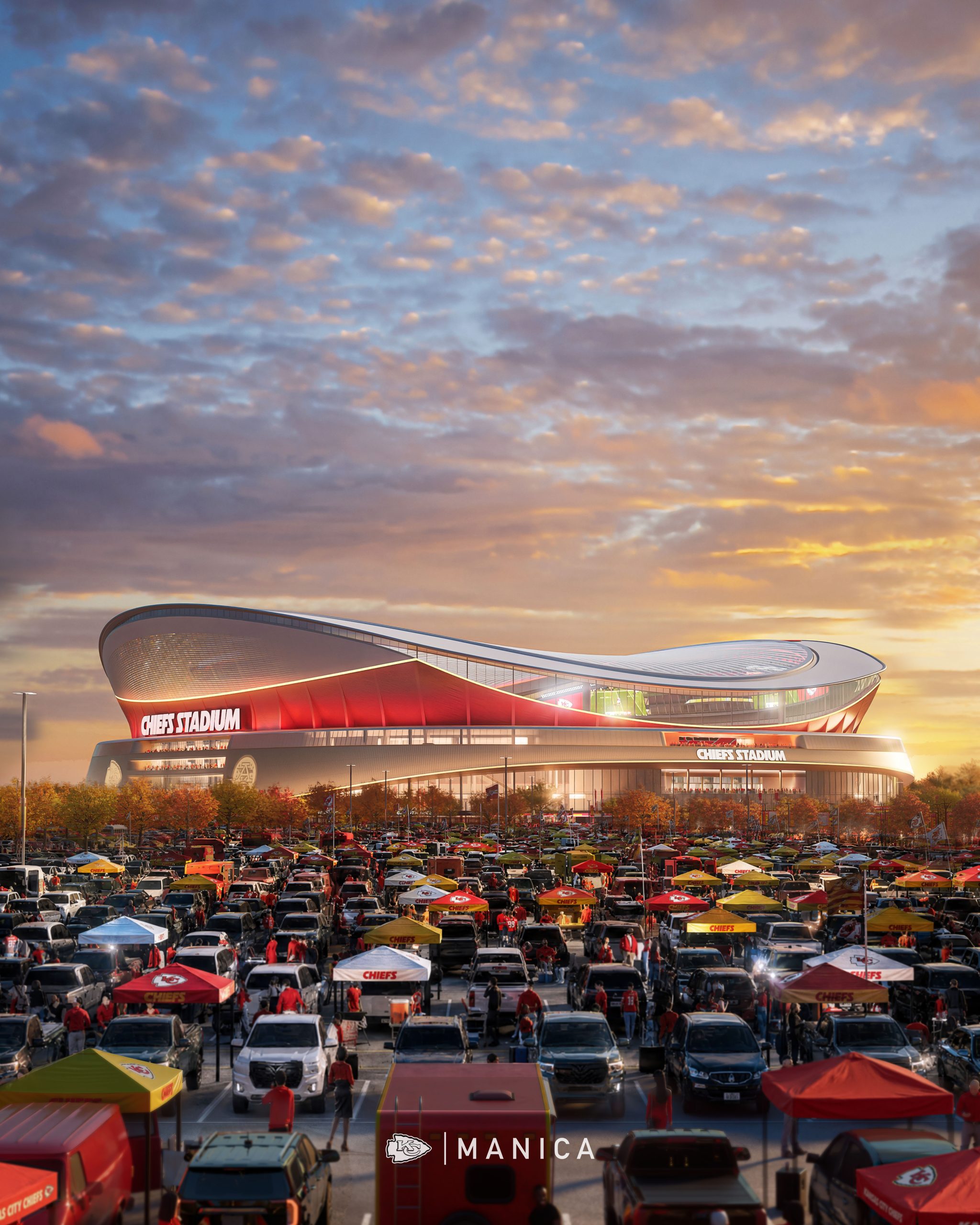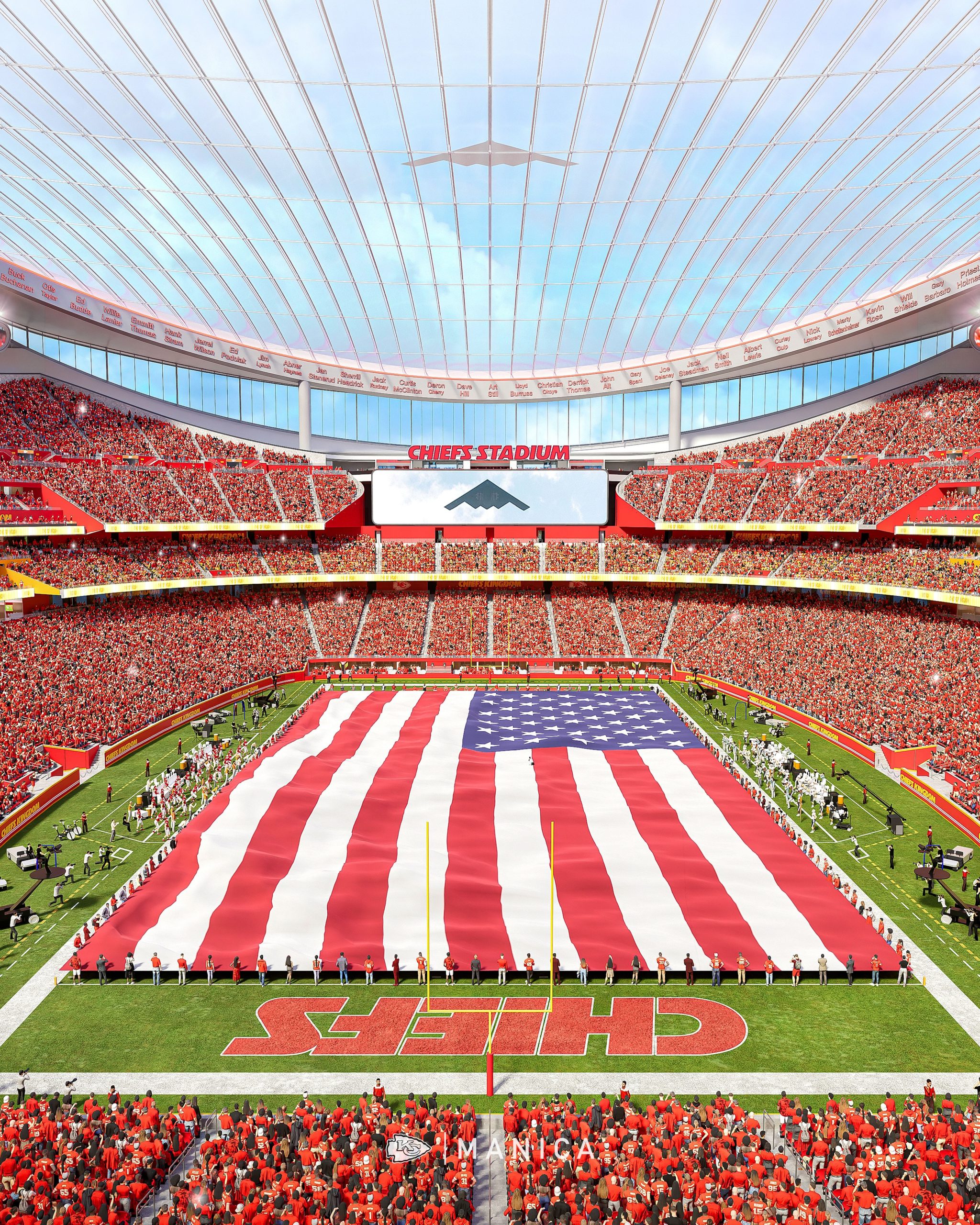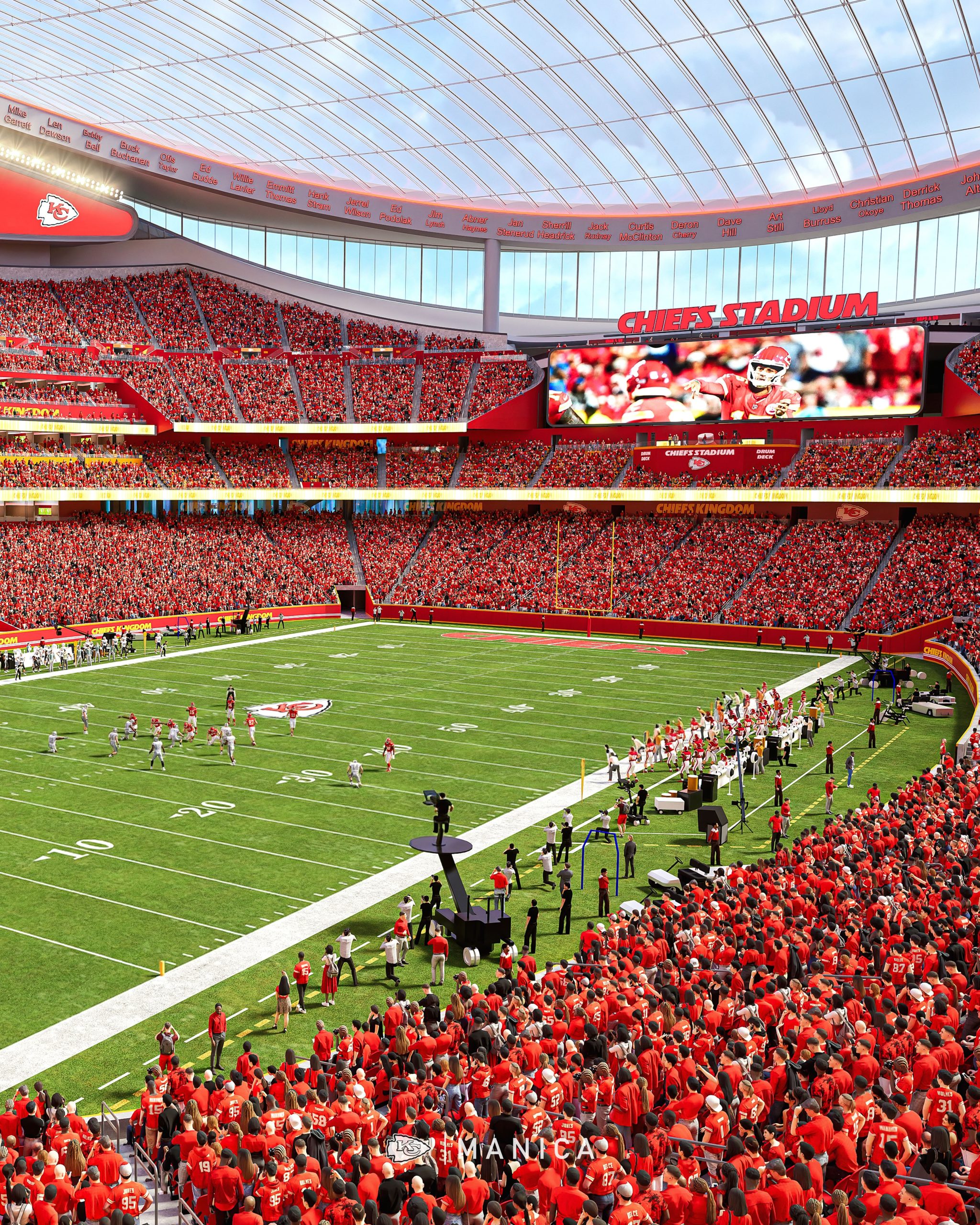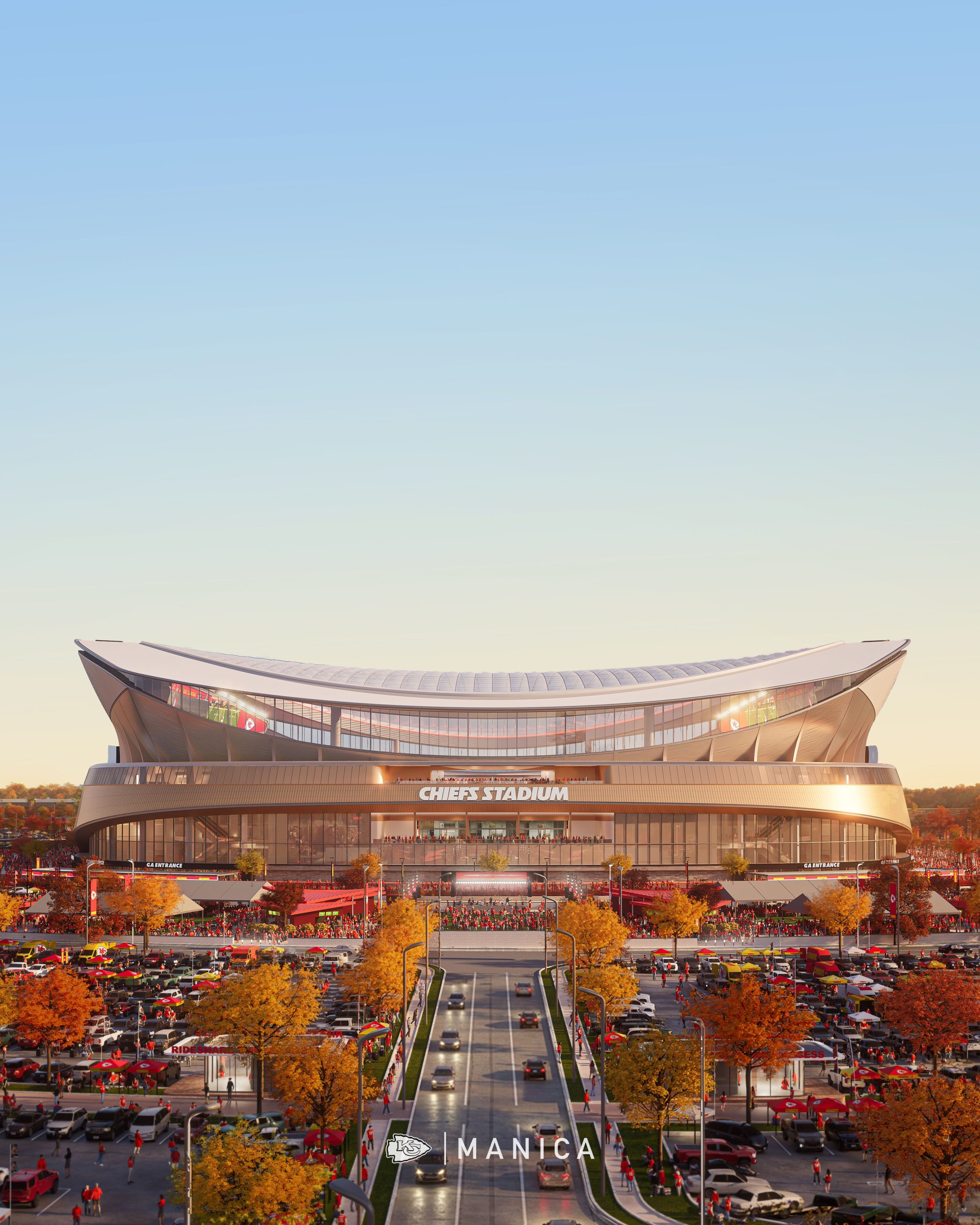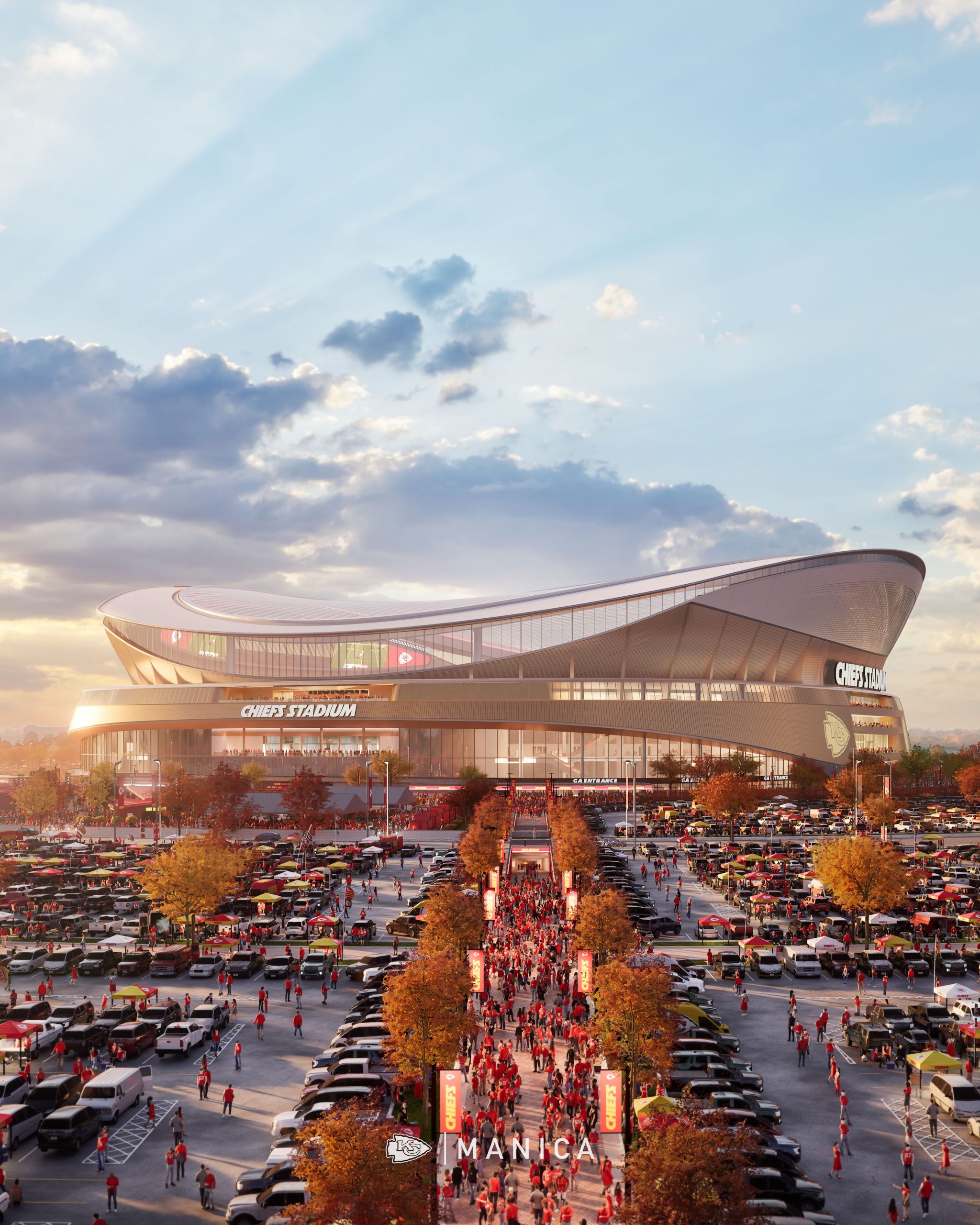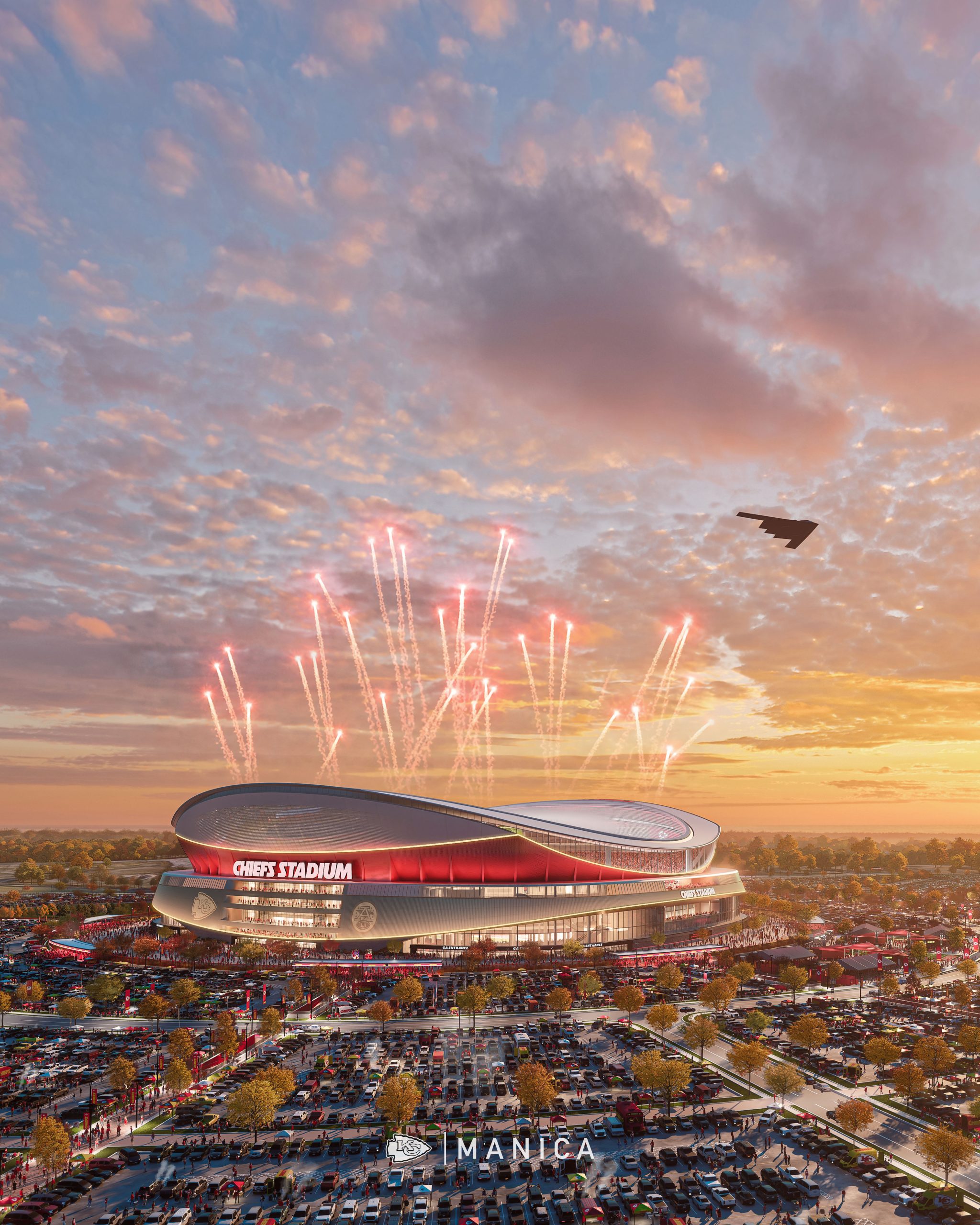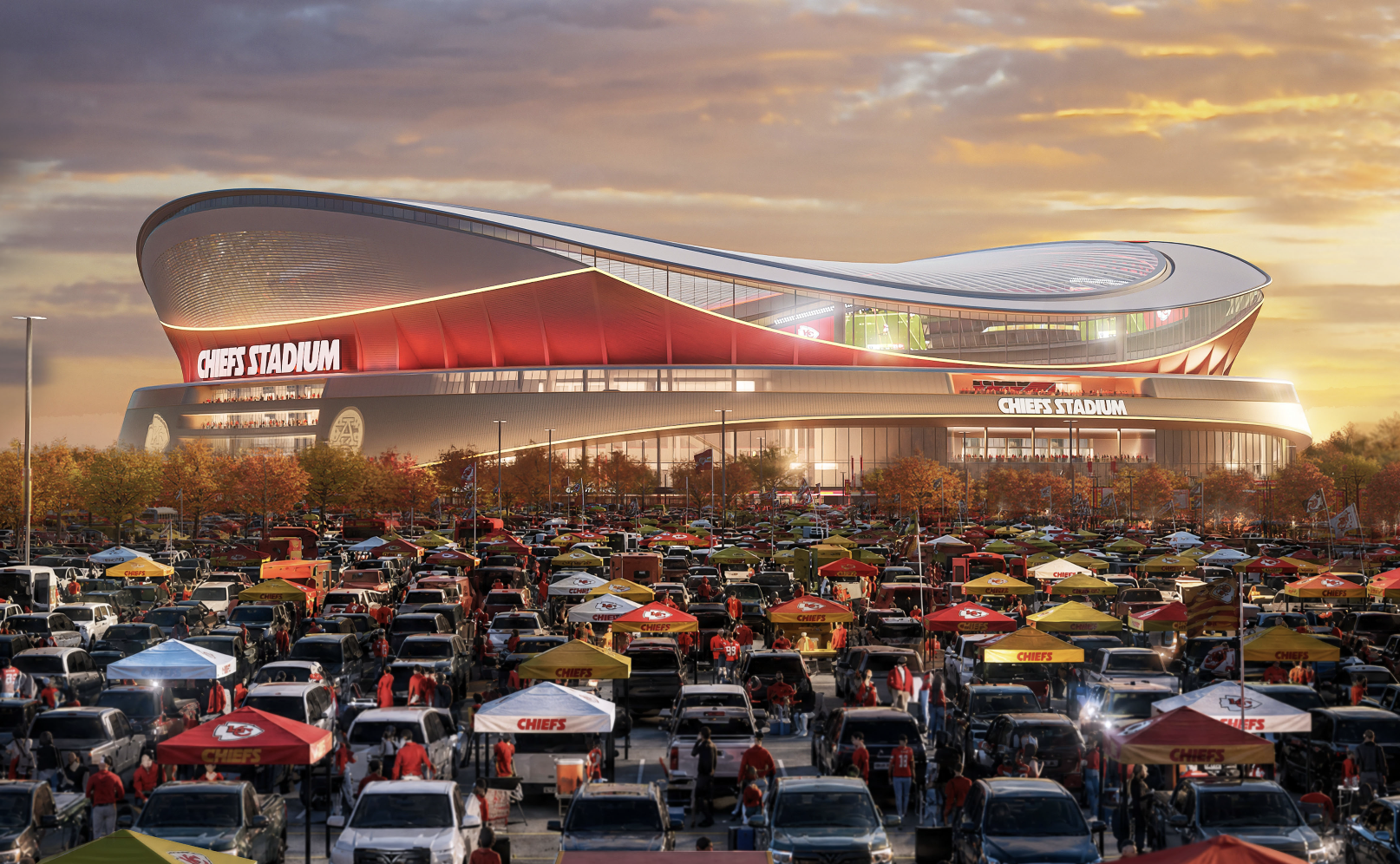
The Kansas City Chiefs have pulled back the curtain on their next home. On Wednesday, July 22, 2026, the club released its first concept renderings for a brand new, fully enclosed stadium set to open in 2031. The team also confirmed the design partners who will bring it to life and shared new details on cost, capacity, economic impact, and how the project will be paid for.
Here is a full rundown of what the Chiefs announced.
The basics
The new stadium will be a fully enclosed venue built in Kansas City, Kansas, in Wyandotte County. That places the Chiefs' future home across the state line from the current GEHA Field at Arrowhead Stadium in Missouri. The club lists the project as a $3 billion build with an expected total capacity of approximately 70,000 and more than 20,000 parking spots.
The Chiefs describe the renderings as initial concepts that are subject to change as details are finalized.
Quick facts
- Opens in 2031
- Located in Kansas City, Kansas (Wyandotte County)
- $3 billion state-of-the-art stadium
- Fully enclosed roof with translucent ETFE panels
- Capacity of approximately 70,000
- More than 20,000 parking spots
- Lead design architect: MANICA (Kansas City based)
- Architect of record: HNTB (Kansas City based)
The design
The centerpiece of the announcement is the enclosed roof, which will feature translucent ETFE panels. More than 400,000 square feet of those translucent panels will sit directly above the playing surface, a design choice the club says is meant to maximize visibility for military flyovers, a longtime Arrowhead gameday tradition.
Sound is a defining part of the plan. The Chiefs say the stadium's size, shape, and roof geometry were studied by audio engineers specifically to maximize crowd noise, with the stated goal of helping fans continue to provide a strong homefield advantage.
Traditions carried into the new era
The renderings lean heavily on continuity with Arrowhead. According to the club, the seating bowl is reminiscent of the current stadium and will include a Drum Deck for pregame and in-game ceremonies, along with the prominent placement of the Chiefs Ring of Honor above the bowl.
The tailgating experience is also part of the design. Parking lot infrastructure will be built specifically to support tailgating, and the plans include pedestrian boulevards that connect tailgating areas, community spaces, and the stadium itself.
Outside the stadium
Beyond the seating bowl, the Chiefs outlined several fan-facing features on the grounds. Fans will be able to visit the Lamar Hunt statue in a modern plaza, tour a Chiefs Hall of Honor that is more than twice the size of its current space, and shop an expanded Chiefs Team Store that is approximately four times larger than the current store. The club says the stadium will anchor a mixed-use development intended to add to the overall gameday experience.
The design team
The Chiefs named a pair of Kansas City based firms to lead the project. MANICA was selected as the lead design architect, and HNTB was named the architect of record. CAA ICON is serving as the owner's representative and led the RFQ, RFP, and lead design competition processes.
The selection concludes a six-month lead design competition. The two finalists were MANICA and Populous.
Chiefs President Mark Donovan said the club is fortunate that Kansas City is home to world-class sports and entertainment design talent, adding that David Manica and his team "stood out throughout a rigorous months-long process, honoring and embracing our history while presenting a bold and dynamic vision for the future."
David Manica, president and owner of MANICA, called it "the honor of a lifetime" to design the next home of the Chiefs in the firm's hometown. HNTB President and project executive Tom O'Grady said the project "brings together our deep roots in Kansas City and our experience delivering transformative sports and entertainment venues."
Economic impact
The Chiefs shared regional economic projections tied to the broader project, which includes the stadium in Wyandotte County, Kansas, a practice facility and team headquarters in Olathe, Kansas, and two private ancillary mixed-use development districts.
During the construction period, the club projects 36,500 full-time equivalent job-years and $8.2 billion in economic impact for the Kansas City region. Once the facilities are operational, the Chiefs project support for 8,500 full-time equivalent jobs and $1.5 billion in annual economic impact for the region.
How it is being financed
The project is structured as a public-private partnership. According to the club, the public portion is funded through Sales Tax and Revenue (STAR) bonds and the Attracting Professional Sports to Kansas Fund. The Chiefs state that both mechanisms were established to ensure there will be no new state taxes and no negative impact on the state budget. The remaining portion will be privately funded. The project also includes $1 billion in additional development in the State of Kansas.
What Clark Hunt said
Chiefs Chairman and CEO Clark Hunt framed the reveal as a first look at the franchise's future home.
"Today we are excited to show Chiefs Kingdom a first look at our new home," Hunt said. "From the beginning, our goal has been to build something that improved the gameday experience for every single fan. This new stadium will do just that."
He added: "While we're still finalizing many of the details, there are a few things we know for sure. It will hold 70,000 fans, it will still be the best place in the world to tailgate, and the whole building will be built for noise."
The bottom line
The renderings offer the clearest look yet at where the Chiefs are headed, both literally and figuratively. The move places the team in Kansas City, Kansas, wraps the field in an enclosed translucent roof, and preserves signature traditions like the Drum Deck, the Ring of Honor, and flyovers. With MANICA and HNTB now on board and a 2031 target, the design will continue to evolve, and the club has been clear that these concepts are subject to change.
Source: Kansas City Chiefs, Chiefs.com, July 22, 2026.